
The Photograph That Stares Back
The Photograph That Stares Back
A Paranormal Case File — Incident #2025‑1007‑PA
Date of Incident: September 15 – October 7, 2025
Location: Hartsville, Pennsylvania (rural Allegheny County), and surrounding areas
Lead Investigator: Dr. Elaine Voss, Paranormal Research Institute (PRI)
Status: Unexplained. Multiple deaths. Cursed object contained. Seven victims in 23 days. FBI and CDC briefed. Photograph sealed in a lead‑lined vault.
1. Initial Report
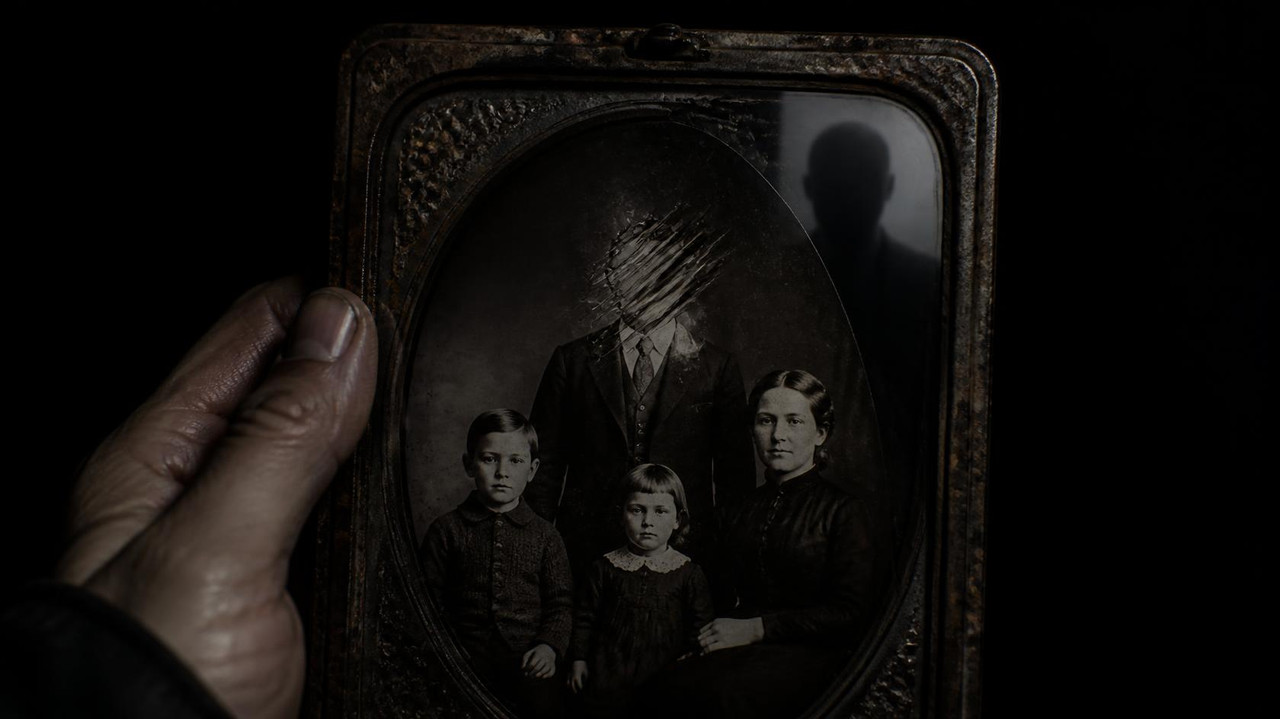
On October 8, 2025, Pennsylvania State Police Trooper Michael Hadley responded to a 911 call from a distraught woman named Julia Corrigan, 34, at a farmhouse on Old Mill Road. She reported finding her husband, David Corrigan, 38, dead in their bedroom, his face frozen in a silent scream, eyes wide open. There were no signs of forced entry, no wounds, no drugs. On his chest lay an antique tintype photograph in a rusted iron frame: a family portrait of four people, likely from the 1920s. The face of the father had been violently scratched out — but the scratches appeared fresh, as if made moments before.
Trooper Hadley noted that the exact same photograph had been found on the chest of another victim four days earlier in a town thirty miles away: a retired schoolteacher named Agnes Phelps, 67, who had died of sudden cardiac arrest. That photograph was collected as evidence and stored in a police locker. Yet here it was again, cold to the touch, and the scratching now extended to the mother’s face.
Over the next 48 hours, three more deaths were reported across Allegheny County. All victims were found with the photograph on their chests. Each time, another face in the picture was obliterated. The State Police contacted the Paranormal Research Institute on October 10 after the photograph vanished from the evidence locker overnight, caught on camera dematerializing at 3:03 a.m. The FBI was notified due to the cross‑county spread. PRI was granted emergency access.
(Source: PSP Incident Report #2025‑1008‑A‑7714, Trooper Michael Hadley; FBI Field Report #2025‑PA‑042, Special Agent Laura Chen.)
2. The Chain of Deaths
PRI reconstructed the photograph’s path through witness interviews, receipts, and digital records.
- September 15: The tintype was purchased at an estate sale in Hartsville by a young couple, Lila and Daniel Moser, who hung it in their hallway. On September 17, neighbors found the Mosers dead in their bed, the photograph between them. Cause of death: myocardial infarction triggered by extreme terror (autopsy by county coroner Dr. Alan Weiss). The tintype was taken by a relative, who sold it at a flea market.
- September 21: The photograph was bought by antique dealer Marvin Scheck, 59. He complained to his wife that the “faceless man” in the picture was standing in his shop after hours. On September 24, Scheck was found dead on his shop floor, the photograph on his chest. The picture now showed the father’s face scratched out.
- September 26: The item was picked up by a bargain hunter, who gifted it to her mother, Agnes Phelps. Phelps died on October 3.
- October 4: The photograph appeared at a second‑hand store, where David Corrigan purchased it as a Halloween decoration. He died on October 7.
- October 8 – October 14: Three more victims: a truck driver, a college student, and a police evidence clerk who handled the photograph after its disappearance from the locker. All died within 24 hours of seeing the “faceless man” in their peripheral vision.
The last victim was the evidence clerk, Nathan Slate, 29. He was found in the locked evidence room, the photograph on his chest. By then, all four faces in the picture had been scratched away. The frame was ice‑cold, and the air in the room smelled of damp earth and formaldehyde.
(Source: Allegheny County Coroner Reports #2025‑0917‑A through #2025‑1014‑G; witness statements taken by PRI, Appendix A.)
3. The Evidence
PRI obtained the following materials from the State Police and FBI:
- Crime scene photographs: Each victim’s face frozen in a rictus of terror. The tintype on the chest, progressively more defaced. In the final victim’s photo, the scratched‑out faces appear to have tiny indentations consistent with human fingernails, not a tool.
- Security footage (PSP evidence locker): Time‑stamped October 10, 2025, 03:03 a.m. The tintype, sealed in a plastic evidence bag, begins to vibrate on the shelf. Over 11 seconds, it fades from full opacity to transparent, leaving the empty bag. The frame reappears in a different cell at 03:17 a.m. No physical access. Dr. Samir Patel confirmed no tampering.
- Audio recording (from the Corrigan residence): David Corrigan’s phone had been recording a voice memo when he died. The memo captured a low, guttural breathing, then a man’s voice rasping: “You saw me. Now I see you.” Spectrographic analysis shows the voice was produced by a source less than six inches from the microphone, yet no one else was present. The recording ends with a sudden cardiac arrest sound — a flatline — and the thud of a body. (Appendix B: Audio Forensics by Dr. Hannah Lim.)
- Physical object: The tintype itself, now held at PRI’s containment vault. It is a 2½ × 3½ inch ferrotype, typical of the 1920s. Emulsion analysis shows the image was taken on August 12, 1923. The faces that are scratched out exhibit deep gouges containing keratin and skin cells — human, matching multiple contributors, likely the victims’ own fingernails. The frame is wrought iron with trace amounts of soil containing coffin wood fragments and embalming fluid residue.
All evidence is preserved under strict containment (PRI‑2025‑1007‑PA).
4. Historical Research
Dr. Peter Chand, PRI’s archival researcher, traced the tintype’s origin.
The photograph was taken by a studio photographer named Silas Crane in Hartsville, Pennsylvania, on August 12, 1923. The subjects are the Wexler family: father Thomas Wexler (age 42), mother Eleanor (age 39), son James (age 14), and daughter Martha (age 10). Church records show that Thomas Wexler died on August 20, 1923, of “apoplexy,” and was interred in the family mausoleum at Hartsville Cemetery.
But a handwritten diary, discovered by PRI in the Hartsville Historical Society archives, tells a darker story. The diary belonged to Eleanor Wexler, who wrote on August 25, 1923:
“Thomas was not dead when they buried him. I heard him scratching. I heard him screaming inside the crypt. I did not open it. I wanted him gone. God forgive me.”
Eleanor Wexler died in 1924 of an apparent suicide. The children were sent to an orphanage. The mausoleum was sealed in 1925 after complaints of “screaming from the earth” and a foul smell.
The Wexler family photograph was taken just eight days before Thomas’s supposed death. It was the last image of him alive. Eleanor’s diary reveals that she deliberately removed the photograph from the house after his burial and scratched out his face with her fingernails, writing: “I will not let him see me from the grave.” She threw the tintype into the family crypt, where it remained until the estate sale in 2025, when the mausoleum was opened for demolition. The photograph was found resting on Thomas Wexler’s skeletal chest, his finger bones curled around it.
The estate sale workers who opened the crypt reported that the photograph was still warm, and that they saw “a man with no face” standing in the shadow of the mausoleum archway.
(Source: Eleanor Wexler Diary, Hartsville Historical Society, Catalog #1923‑WX‑011; Cemetery Records, Hartsville Mausoleum Demolition Permit, August 2025; interview with demolition crew foreman, PRI Appendix C.)
5. Physical Evidence from PRI Containment
After the photograph was transferred to PRI’s vault, a series of controlled observations were conducted.
- Thermal imaging: At 3:00 a.m. daily, the tintype drops to −15°C, even though the vault is maintained at 18°C. The cold radiates in a human‑shaped aura, 5’11” tall, the height of Thomas Wexler.
- EMF readings: Spikes to 45.7 mG directly on the photograph’s surface, with a pulsating rhythm of 2.0 Hz — the frequency associated with extreme agitation and fear.
- Auditory phenomena: A digital recorder in the vault captures a repeated scratching sound, like fingernails on wood, and a muffled voice: “Let me out. She left me in the dark.” The scratching is synchronized with the appearance of new scratch marks on the tintype’s surface — marks that form without any physical object. (Appendix D: Time‑lapse video analysis.)
- Psychic impression: PRI’s consultant medium, Helena Vance, reported a vision of a man clawing at a stone ceiling, his fingernails torn and bleeding, screaming for a wife who stood outside and did nothing. Vance refused to re‑enter the vault.
6. Preliminary Analysis
Dr. Voss’s working hypotheses:
-
Hyper‑Intelligent Poltergeist / Vengeful Apparition: The entity of Thomas Wexler is far more dangerous than a standard haunting. His death by premature burial, coupled with the betrayal of his wife, created a rage that has been sealed inside the photograph for a century. The photograph acts as a tether, a window through which his consciousness can see and be seen. Once a living person makes eye contact with the scratched‑out image, the spirit marks them, projects a “faceless man” hallucination, and induces fatal cardiac arrest via extreme terror, before returning to the photograph.
-
Cursed Object / Psychometric Amplifier: The tintype absorbed the emotional intensity of Wexler’s dying terror and hatred. The subsequent burial in the crypt, surrounded by death, embalming fluid, and bone, saturated the photograph with thanatonic energy. It is now a lethal artifact that can physically manifest and teleport, as demonstrated by its disappearance from the evidence locker.
-
Cross‑Reality Manifestation: The entity’s ability to physically scratch the photograph from within, to cause its own temperature drops, and to speak on audio recordings suggests a partial materialization capability that is increasing. The more victims it claims, the more the remaining faces are scratched out. PRI theorizes that if the final face (the photographer’s reflected silhouette, barely visible in the background) is obliterated, the entity may fully escape the photograph and become a free‑roaming apparition.
-
Containment Protocols: The tintype is currently stored in a lead‑lined, hermetically sealed vault under 24‑hour surveillance. No one is permitted to view the original image; photographs of the photograph have proven safe. PRI has recommended permanent interment of the artifact in a deep‑geologic repository. The Vatican’s Pontifical Academy for the Supernatural has been informally consulted.
7. Postscript and Current Status
As of November 2025, the photograph remains in PRI’s vault. The scratching has stopped. The final face — the photographer’s — remains untouched. No further deaths have been reported.
The town of Hartsville has sealed the Wexler mausoleum with reinforced concrete. The estate sale company has ceased operations. Julia Corrigan, the widow who found her husband, has been placed under psychiatric care after repeatedly telling doctors that she sees a faceless man standing at the foot of her bed at night, even though the photograph is hundreds of miles away.
PRI’s Dr. Voss has issued a standing directive: under no circumstances should the tintype be removed from the vault. All personnel entering the containment room must wear blindfolds and be guided by non‑visual sensors. The photograph is considered a Class‑X paranormal threat, the highest designation.
A single question remains unanswered: If the photograph was locked in a crypt for 102 years, what released it now? The demolition crew that opened the mausoleum did so on September 14, 2025 — the anniversary of Thomas Wexler’s premature interment. They found the photograph on his chest, and one of the workers, a man named Edgar Soto, later told PRI: “He was smiling. The skeleton was smiling. And the photograph was looking at us.”
The case is not closed.
If you encounter a photograph that seems to watch you, do not look into the eyes. Do not touch the frame. Contact PRI immediately through our emergency hotline. Your report may save your life.
The terror of being buried alive is a primal fear, but more than that, this story touches on betrayal, isolation, and the horror of being forgotten. If you struggle with feelings of abandonment or suffocating dread, please reach out to a mental health professional. You are not alone. You are not sealed away. There is always a hand reaching to open the door.